Brief
Internal affairs minister Hayashi cut from Japan PM's Cabinet in reshuffle
Japan's internal affairs minister, Hayashi, has been dropped from the prime minister's Cabinet in a reshuffle, according to a breaking-news report. The report as it stands gives no reason, no timing and no successor, so the practical consequences are not yet clear.
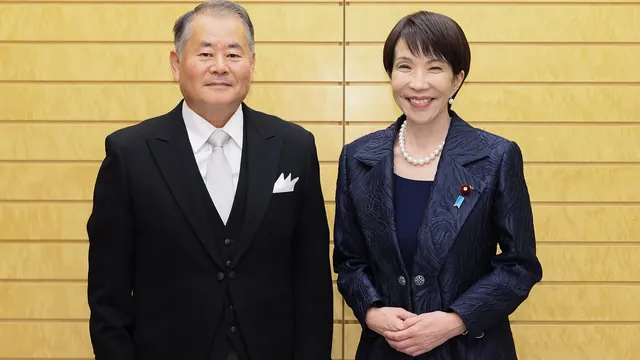
.jpg)
The internal affairs minister, Hayashi, has been cut from the prime minister's Cabinet in a reshuffle, per a breaking-news headline. The internal affairs portfolio is a domestic-facing one, covering matters that reach households and local authorities, which is why a change at the top of it matters to readers.
Beyond the fact of the removal, the report gives no reason, no timing and no successor. Readers should treat the practical consequences as unresolved until a replacement is named and the reason for the change is confirmed.
Our reading
A Cabinet-level change at a domestic ministry can shift how rules touching local government, elections and communications are applied, so anyone living in, working with or visiting Japan has a reason to note it. The uncertainty is the point: with no named successor and no stated reason, it is too early to say what, if anything, changes on the ground.
What to do or watch
Watch for the full report and the naming of a successor. Until then the precise unresolved question is who takes the internal affairs portfolio and why Hayashi was removed.
Source details and supporting facts
Each line is stated by the page named above it.
Stated by english.kyodonews.net
- Internal affairs minister Hayashi was cut from Japan PM's Cabinet in a reshuffle.
Sources
- Kyodo News (English)Text stored 17 September 2026
How this story was checked. Written from the 1 page listed above, stored 17 September 2026; claims checked against that stored text on 17 September 2026.
What that means
- 1 of 1 reported statements were confirmed against the page that carries them; the rest were removed rather than published.
- Figures in the text were required to appear in the stored source text: yes. Identifiers: yes.
- The check reads stored text only: no claim rests on a fresh look that did not happen.
- Where the reporting was silent, the text says so instead of filling the gap.